Next-Generation Air Dominance Concepts
Updated: Aug 22
APEX Defense | Published: July 30th, 2026

Introduction
Air dominance has long been one of the defining factors in determining military success. Throughout modern history, nations capable of controlling the skies have gained significant operational advantages across every domain of warfare, from intelligence collection and precision strike operations to force protection and logistical support. However, the rapid advancement of sensing technologies, integrated air defense systems, artificial intelligence, autonomous platforms, and long-range precision weapons is reshaping the nature of aerial combat. Traditional fourth- and fifth-generation fighters remain highly capable, but future conflicts will demand a broader, interconnected system capable of operating effectively in increasingly contested environments.
Next-generation air dominance represents a shift away from relying on a single aircraft as the centerpiece of air superiority. Instead, it embraces an integrated network of crewed and uncrewed platforms, advanced communications, distributed sensors, adaptive propulsion systems, and artificial intelligence working together as a unified combat ecosystem. This systems-based approach seeks to increase survivability, expand operational flexibility, and enable rapid decision-making in environments where information superiority is as important as kinetic capability.
The Evolution of Air Dominance
Historically, air superiority has evolved alongside advances in aviation technology. Early air combat emphasized maneuverability and pilot skill, while later generations introduced radar, guided missiles, stealth technology, and advanced avionics. Fifth-generation aircraft demonstrated the value of low observable design, sensor fusion, and network-centric operations, fundamentally changing how aerial engagements are conducted.
Future air dominance concepts build upon these developments by expanding the battlefield beyond the individual aircraft. Instead of focusing solely on improving speed or maneuverability, modern design philosophies emphasize collaboration between multiple assets operating simultaneously across vast operational areas. Aircraft, satellites, unmanned systems, naval forces, and ground-based sensors increasingly function as interconnected nodes within a larger information network capable of sharing data in near real time.
Human-Machine Teaming
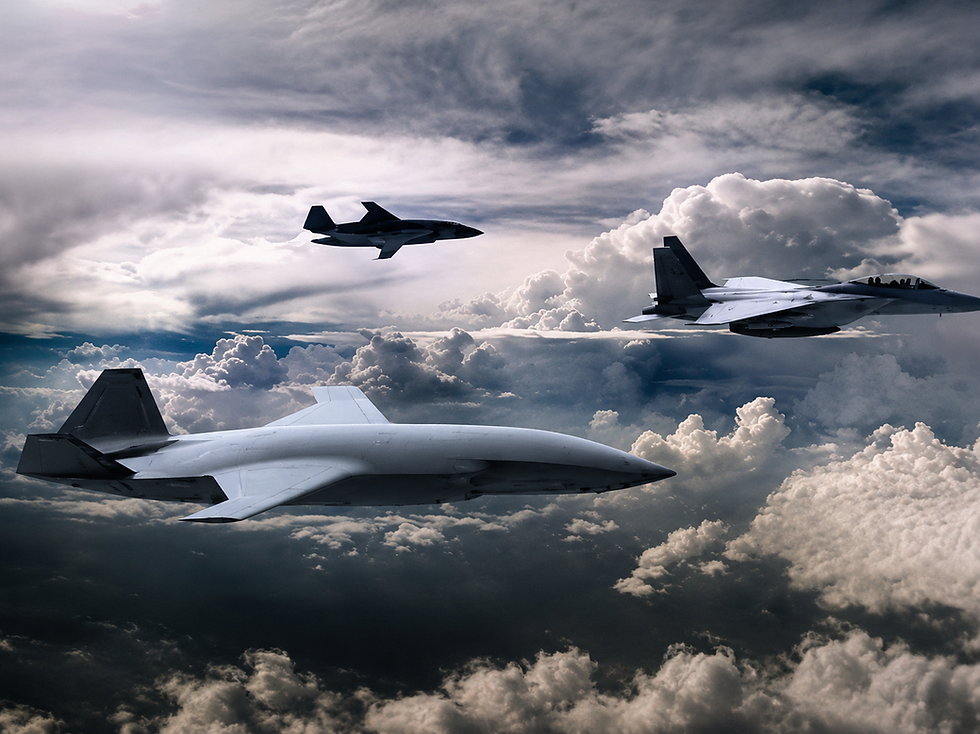
One of the most transformative concepts in future air combat is human-machine teaming. Advances in artificial intelligence and autonomous flight technologies are enabling unmanned aircraft to operate alongside crewed fighters as cooperative force multipliers. Rather than replacing pilots, autonomous systems are expected to assume dangerous or repetitive tasks while allowing human operators to retain strategic decision-making authority.
Collaborative autonomous aircraft may conduct reconnaissance missions, electronic warfare, suppression of enemy air defenses, communications relay, decoy operations, or precision strikes while remaining coordinated with manned platforms. This partnership increases operational flexibility by allowing commanders to distribute risk across multiple systems while reducing pilot workload during highly complex missions. As machine learning algorithms continue to mature, these collaborative systems may adapt dynamically to changing battlefield conditions while remaining under appropriate human supervision.
Advanced Propulsion and High-Performance Flight
Future air dominance platforms will likely require propulsion systems capable of delivering exceptional performance across a wide range of flight conditions. Emerging concepts include adaptive-cycle engines, variable bypass propulsion, advanced thermal management systems, and potentially combined-cycle propulsion architectures designed to optimize efficiency during both subsonic and supersonic operations.
Improved propulsion technology offers benefits extending well beyond increased speed. Greater fuel efficiency can significantly expand operational range and mission endurance while reducing logistical demands. Enhanced thermal management supports increasingly powerful onboard sensors, electronic warfare systems, and computing hardware. Future propulsion systems may also contribute to improved infrared signature management, increasing survivability against modern tracking systems that exploit thermal emissions.
Integrated Sensor Fusion and Information Superiority
Information has become one of the most valuable resources in modern warfare. Future air dominance concepts rely heavily on advanced sensor fusion to transform vast quantities of data into actionable intelligence. Radar, infrared search and track systems, electronic support measures, satellite inputs, and off-board sensors can be integrated into a unified operational picture that enables pilots and commanders to make faster, more informed decisions.
Artificial intelligence is expected to play an increasingly important role in managing this information. Rather than overwhelming operators with raw sensor data, intelligent software may prioritize threats, recommend courses of action, identify targets, and assist in mission planning. Faster decision cycles can provide a decisive operational advantage, particularly during engagements where seconds may determine mission success or failure.
Survivability in Contested Environments
Future operational environments will likely feature dense networks of advanced surface-to-air missile systems, long-range sensors, cyber threats, electronic warfare capabilities, and anti-access strategies designed to deny freedom of maneuver. Consequently, survivability must extend beyond traditional stealth alone.
Next-generation concepts increasingly emphasize layered survivability through a combination of low observable shaping, electronic warfare, cyber resilience, distributed operations, signature management, and active defensive systems. Aircraft may continuously adapt their electromagnetic emissions while coordinating with unmanned assets that confuse, deceive, or saturate enemy sensor networks. This multidimensional approach seeks to complicate adversary targeting processes while preserving operational effectiveness throughout increasingly sophisticated threat environments.
Modular Design and Rapid Technology Integration
The accelerating pace of technological development presents significant challenges for traditional military acquisition programs. Aircraft designed over decades risk incorporating outdated technologies before entering operational service. To address this challenge, future air dominance concepts increasingly emphasize modular open-system architectures that allow sensors, processors, mission software, and electronic warfare equipment to be upgraded throughout an aircraft’s operational lifespan.
Modularity reduces modernization costs while allowing emerging technologies to be incorporated rapidly without requiring entirely new aircraft designs. Open architectures also improve interoperability between military services and allied nations by enabling standardized interfaces for future hardware and software integration. This philosophy supports continuous capability evolution rather than relying solely on infrequent generational replacements.
Multi-Domain Integration
Air dominance is no longer confined exclusively to the atmosphere. Modern military operations increasingly span air, land, sea, space, and cyberspace, requiring seamless coordination between multiple operational domains. Future aircraft are expected to function as highly connected nodes capable of exchanging information with satellites, naval vessels, ground forces, unmanned systems, and command centers across global networks.
This level of integration supports synchronized operations that maximize the effectiveness of distributed forces. Space-based assets may provide communications, navigation, missile warning, and reconnaissance while cyber capabilities protect friendly networks and disrupt adversary command structures. Together, these interconnected systems create a resilient operational architecture capable of maintaining effectiveness even when individual components are degraded or denied.
Emerging Technologies and Future Possibilities
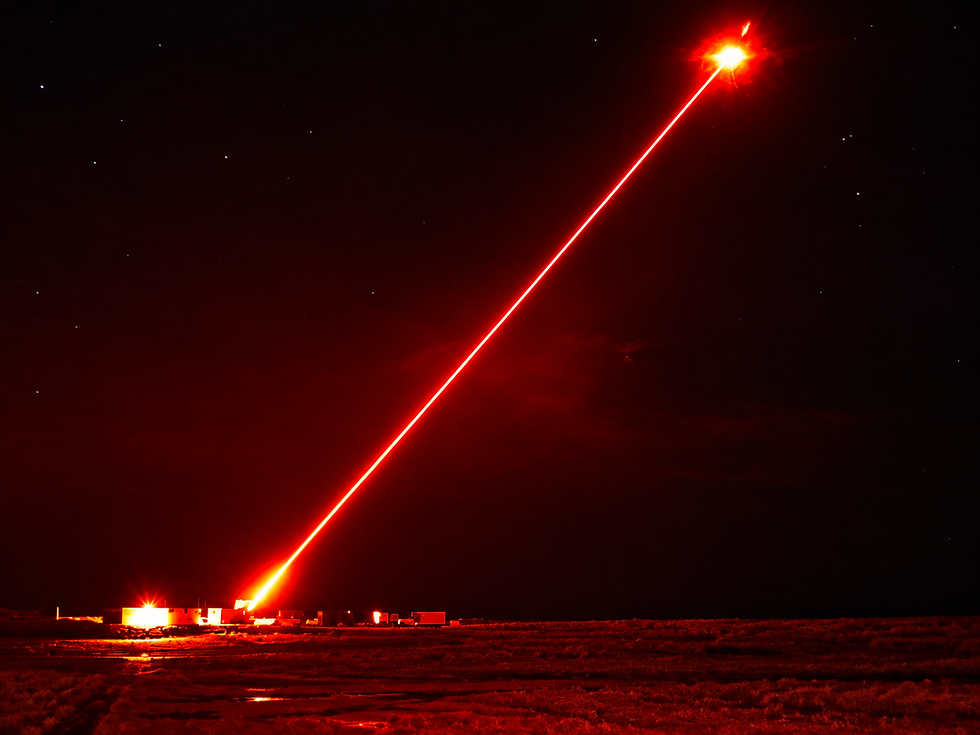
Several emerging technologies possess the potential to reshape future air dominance even further. Directed energy systems, advanced electronic attack capabilities, quantum sensing, resilient satellite constellations, additive manufacturing, and increasingly autonomous mission planning tools continue to receive significant research attention. Although many remain in developmental stages, their integration could substantially alter future operational concepts.
Artificial intelligence may eventually enable adaptive mission optimization, predictive maintenance, autonomous logistics coordination, and improved battlespace management. Advances in materials science could reduce structural weight while improving durability and thermal performance. Collectively, these innovations demonstrate that future air dominance will depend as much on software, networking, and information processing as on traditional aerodynamic performance.
Conclusion
Next-generation air dominance represents a comprehensive transformation in the philosophy of aerial warfare. Rather than emphasizing a single revolutionary aircraft, future concepts prioritize interconnected systems that combine advanced propulsion, artificial intelligence, autonomous collaboration, sensor fusion, modular architectures, and multi-domain integration into a cohesive operational ecosystem. Success will increasingly depend upon the ability to collect, process, distribute, and act upon information faster than potential adversaries while maintaining survivability within highly contested environments.
As technological innovation continues to accelerate, future air forces must remain adaptable to evolving operational requirements and emerging threats. Investments in collaborative autonomy, resilient networking, advanced propulsion, and integrated mission systems are likely to define the next era of aerospace capability. Ultimately, the pursuit of next-generation air dominance is not solely about building faster or stealthier aircraft, but about creating intelligent, resilient, and highly connected systems capable of maintaining operational superiority across the increasingly complex battlespace of the future.

Comments